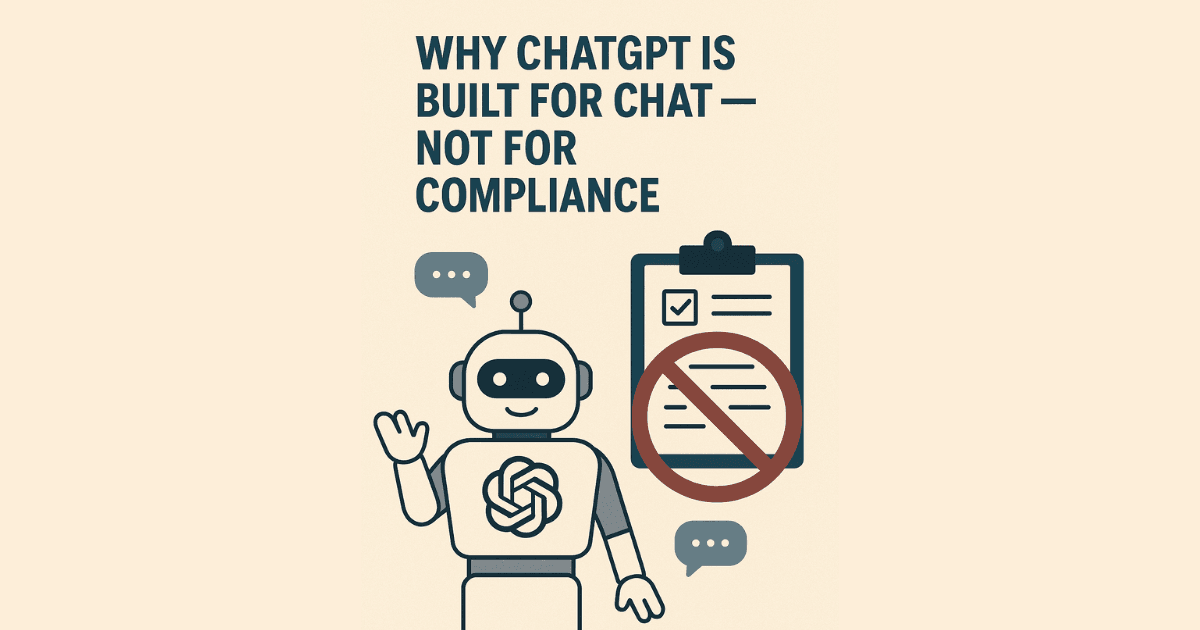
There’s no denying that ChatGPT is impressive. It can write emails, explain complex topics, and even summarize IRS publications in a way that sounds almost human. But sounding human isn’t the same as being compliant — and in accounting, that distinction matters more than anything.
ChatGPT was designed to generate conversation, not guarantee compliance. It’s optimized for fluency, not for fact-checking. And while that’s fine for writing a marketing blurb or brainstorming ideas, it’s risky when you’re dealing with something as precise — and regulated — as tax law or financial reporting.
What ChatGPT Was Actually Built For
Ready to transform your practice with AI? Talk to Tax Stack AI about a custom system built for your firm.
ChatGPT is a language model, not an accounting engine. Its purpose is to predict what word should come next in a sentence based on patterns in human language. That makes it incredibly good at conversation — and incredibly unreliable at anything requiring verified logic or legal accuracy.
When you ask ChatGPT a question like “What’s deductible under Section 179?” it doesn’t access the Internal Revenue Code. It generates an answer based on how people have written about Section 179 online. The result might look polished, but it could easily be:
Outdated (reflecting pre-2024 thresholds or expired rules)
Incomplete (omitting exceptions, limitations, or state-level differences)
Flat-out wrong (confusing Section 179 with bonus depreciation or capital improvements)
ChatGPT isn’t doing research; it’s simulating understanding. That’s not compliance — that’s conversation.
Compliance Requires More Than Words
In accounting, accuracy isn’t optional. Every return, every adjustment, and every disclosure must align with specific laws and standards. Professionals need to know:
Which rule applies
When it applies
To whom it applies
What documentation supports it
ChatGPT doesn’t process that kind of structured logic. It can’t cross-reference IRS guidance with a client’s entity type, reconcile numbers from a workpaper, or ensure that a recommendation aligns with the latest FASB update. It can only generate text that sounds plausible.
Compliance, on the other hand, requires traceability, evidence, and accountability — qualities that conversational AI doesn’t (and can’t) provide.
Conversation vs. Compliance Intelligence
The difference between ChatGPT and purpose-built accounting AI can be summed up in one word: intent.
The contrast is clear: ChatGPT is built to talk. Accountants need AI that can prove.
Why Accountants Can’t Afford “Good Enough”
In accounting, even a small error can have big consequences — for clients, regulators, and reputations. Using a generic AI that’s 90% correct isn’t innovation; it’s liability.
If ChatGPT gives an outdated or incorrect answer, it won’t face the IRS, explain itself to a client, or take responsibility. You will. That’s why professionals can’t rely on conversational tools to perform compliance-sensitive tasks. They need systems that provide:
Verifiable reasoning — showing how the answer was reached
Real-time updates — reflecting the most current tax laws
Regulatory alignment — with IRS, AICPA, and state standards
Auditability — so every recommendation can be documented and defended
Compliance doesn’t mean avoiding mistakes — it means being able to prove you didn’t make one.
The Role of Purpose-Built AI
Purpose-built accounting AI starts with compliance, not conversation. It’s engineered to understand context — entity type, jurisdiction, filing year, and regulation — before generating an answer.
Rather than predicting language, it applies structured rules. It can reason through tax positions, reference authoritative sources, and maintain privacy and traceability at every step. It doesn’t just sound professional — it behaves professionally.
Final Thoughts
ChatGPT has changed how people interact with information, but it hasn’t changed what accountants are responsible for. In a profession defined by compliance, precision, and ethics, “close enough” doesn’t cut it.
The future of accounting AI isn’t about better conversation — it’s about better compliance. Tools built specifically for accountants combine verified intelligence, secure data handling, and transparent reasoning. They don’t just answer questions — they stand behind them.
Because ChatGPT can talk about accounting all day. But it can’t sign a workpaper, cite the tax code, or protect your clients. And that’s why it’s built for chat — not for compliance.