For decades, the role of accountants has been rooted in meticulous number crunching, manual audits, and the ongoing challenge of staying compliant in an ever-changing regulatory environment. Today, however, accounting is on the verge of its biggest transformation yet. Artificial intelligence (AI) is reshaping how firms operate, the value accountants bring to their clients, and the tools that even the smallest firms can now access.
At the center of this shift is a new generation of tax technology platforms—like Tax Stack AI—that put enterprise-level capabilities directly into the hands of small-sized firms. The future of accounting isn't about replacing accountants. It's about empowering them with technology that allows them to focus on higher-value work while AI handles the repetitive, error-prone tasks.
The Rise of AI in Accounting
Ready to transform your practice with AI? Talk to Tax Stack AI about a custom system built for your firm.
AI is no longer a futuristic concept—it's already embedded in many business processes, from fraud detection in banking to customer support chatbots. In accounting, its impact is both profound and practical. Machine learning and natural language processing allow AI systems to analyze financial data at scale, identify patterns, and even predict risks.
What once required hours of manual work—tax research, client management, checking compliance details—can now be streamlined through automation and AI-powered tools. This doesn't just save time; it reduces human error and ensures firms can provide more reliable results.
Why Accountants Are More Valuable Than Ever
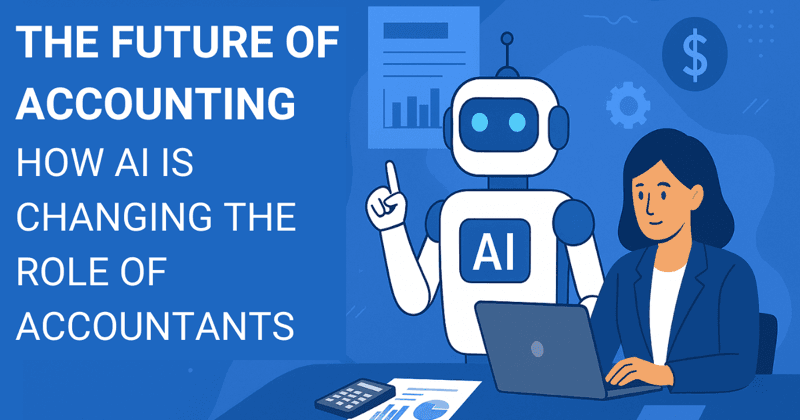
The fear that "AI will replace accountants" is common, but it's misguided. What AI does is shift the role of accountants from technicians to advisors. Instead of spending the majority of their time processing data and researching, accountants can now interpret data, offer strategic tax planning, and guide clients through complex financial decisions.
For example, when compliance questions and workflows are handled by AI, accountants are free to:
- Provide deeper advisory services
- Focus on tax strategy rather than repetitive filings
- Help clients identify long-term savings opportunities
- Build stronger relationships based on trust and insight
In other words, AI doesn't diminish the role of accountants—it amplifies their impact.
The Barriers Smaller Firms Face
Historically, only large firms with massive budgets had access to sophisticated tax technology. Smaller firms were left behind, relying on manual processes or using expensive software that only met a fraction of their needs. This gap created real disadvantages: higher overhead costs, longer turnaround times, and less ability to compete for top-tier clients.
This is the problem Tax Stack AI set out to solve. By delivering enterprise-level tax technology at a fraction of the cost, the platform allows small-sized firms to remain compliant and deliver client experiences that rival much larger competitors.
How Tax Stack AI Fits Into the Future of Accounting
Tax Stack AI isn't just a tool—it's part of a bigger industry movement. As the accounting profession evolves, firms need technology that:
- Reduces costs by simplifying research
- Ensures compliance with constantly shifting regulations
- Enables scalability without requiring firms to dramatically increase headcount
- Provides actionable insights that accountants can use to deliver more value
By combining advanced AI with user-friendly workflows, Tax Stack AI empowers accountants to reclaim their time, reduce stress around compliance, and position themselves as strategic advisors. This future isn't decades away—it's already happening.
What the Next 5 Years Will Look Like
The next five years will bring even greater adoption of AI in accounting. We can expect:
- Standardization of AI-driven compliance tools across firms of all sizes
- Increased demand for advisory services as compliance becomes more automated
- New regulations on AI in accounting, requiring firms to adopt platforms that prioritize accuracy and transparency
- A competitive edge for early adopters, as firms using AI deliver faster, more accurate, and more valuable services to clients
Firms that embrace AI now will be well-positioned to grow, while those that resist risk being left behind in a rapidly changing industry.
Conclusion: A Smarter Future for Accountants
The future of accounting isn't about replacing accountants—it's about redefining their role. AI removes the administrative burden, giving accountants the opportunity to focus on what matters most: guiding clients, providing strategy, and ensuring long-term financial success.
With tools like Tax Stack AI, even the smallest firms can access the same technology once reserved for the Big 4. That means a level playing field, more opportunities for growth, and a profession that is stronger, smarter, and better equipped for the future.