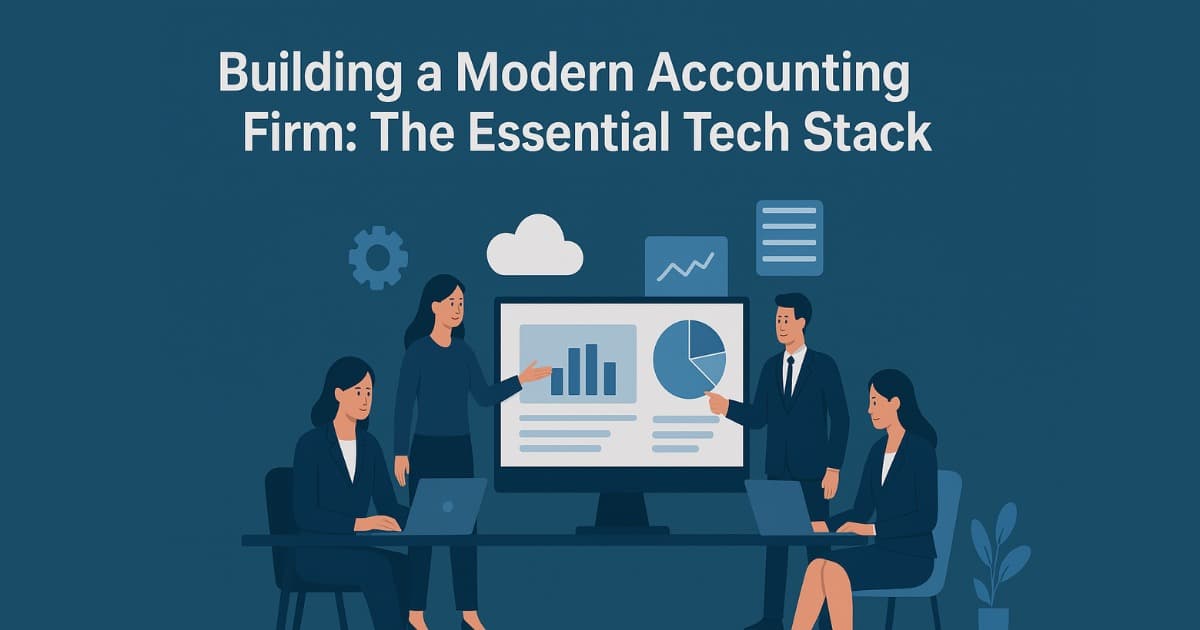
Running a small-sized accounting firm in today's environment requires more than just expert knowledge in tax and compliance. Clients expect timely responses, accurate reporting, and personalized advisory services. To meet these demands, accountants need a modern technology stack that enhances efficiency, reduces errors, and supports growth.
In this guide, we'll outline the essential tools every small-sized firm should consider, highlighting how Tax Stack AI can serve as the cornerstone of your accounting tech stack.
1. Cloud-Based Accounting Software
Ready to transform your practice with AI? Talk to Tax Stack AI about a custom system built for your firm.
The foundation of any modern accounting firm is a cloud-based accounting platform. Unlike desktop solutions, cloud software allows accountants to:
- Access client data from anywhere
- Collaborate in real-time with staff and clients
- Reduce IT infrastructure costs
Popular choices include QuickBooks Online, Xero, and Sage Intacct. The key is selecting software that integrates seamlessly with other tools in your tech stack. Cloud-based accounting ensures your data is centralized and secure while supporting efficiency and remote collaboration.
2. AI-Powered Tax Research Tools
Staying on top of tax code changes and complex regulations can be daunting. Traditional research methods are time-consuming and prone to error. AI-powered tools, like Tax Stack AI's chatbot for tax research, allow accountants to:
- Instantly access relevant tax information
- Reduce time spent on manual research
- Increase accuracy and compliance
By integrating AI into your stack, small-sized firms gain enterprise-level research capabilities without hiring a large research team, freeing accountants to focus on value-added services.
3. Customer Relationship Management (CRM) with Insights
A modern tech stack isn't just about numbers—it's about understanding clients. CRM platforms help firms track interactions, manage contacts, and monitor client needs. When enhanced with AI, like Tax Stack AI's AI-powered client insights tool, CRMs can also:
- Identify patterns and opportunities in client data
- Flag potential tax risks or savings
- Provide actionable recommendations for advisory services
This combination transforms your CRM from a simple contact database into a strategic advisory tool.
4. Document Management and Analysis
Accounting firms handle a large volume of documents—contracts, filings, financial statements—that require careful review. Traditional manual review is slow and error-prone. Modern document management systems with AI capabilities, such as Tax Stack AI's document analysis, allow firms to:
- Quickly extract key information from documents
- Identify potential compliance issues
- Reduce staff hours spent on manual review
By integrating AI-driven document analysis into your tech stack, small firms can operate more efficiently and reduce risk.
5. Workflow and Collaboration Tools
Even without full automation, small-sized firms benefit from collaboration platforms like:
- Slack or Microsoft Teams for communication
- Asana or Trello for project tracking
- Secure cloud storage for file sharing
These tools help coordinate tasks across teams and keep everyone aligned on client deliverables. While AI handles research, insights, and analysis, workflow tools ensure smooth communication and project visibility.
6. Security and Compliance Tools
Data security is non-negotiable. Small firms should integrate tools that provide:
- Encrypted data storage
- Multi-factor authentication
- Audit trails and compliance reporting
Cloud platforms often include these features, but dedicated security tools provide an additional layer of protection, ensuring client information remains confidential.
7. Integrating Tax Stack AI as the Core
While each element of the tech stack adds value, Tax Stack AI serves as the core intelligence layer. Its suite of AI tools directly supports the three pillars of modern accounting:
- Research: AI chatbot provides instant access to complex tax information
- Client Advisory: AI-powered insights help accountants identify risks, opportunities, and strategies for clients
- Document Analysis: AI quickly interprets filings and statements, reducing errors and freeing time for strategic work
By centralizing AI capabilities in one platform, small-sized firms can elevate every aspect of their practice, from compliance to advisory services.
Putting It All Together
A modern accounting firm thrives when technology supports both efficiency and client service. Your essential tech stack should include:
- Cloud-based accounting software
- AI-powered tax research tools (Tax Stack AI)
- AI-enhanced CRM for client insights
- AI-powered document management
- Workflow and collaboration tools
- Security and compliance solutions
By integrating these components, small-sized firms can compete with larger firms, deliver higher-value services, and grow sustainably without adding excessive staff.
Conclusion
Building a modern accounting firm is about more than software—it's about creating an ecosystem that empowers accountants to work smarter, serve clients better, and scale efficiently. With Tax Stack AI at the core of your tech stack, small firms gain enterprise-level capabilities in research, insights, and document analysis—all designed to enhance both compliance and advisory services.
The right technology stack doesn't just support your firm's operations—it transforms them, giving accountants the tools to focus on what matters most: providing exceptional service and strategic guidance to clients.